Bassett Healthcare Network Using Innovative Treatments to Reduce Recovery Times After Gallbladder Issues
June 17, 2026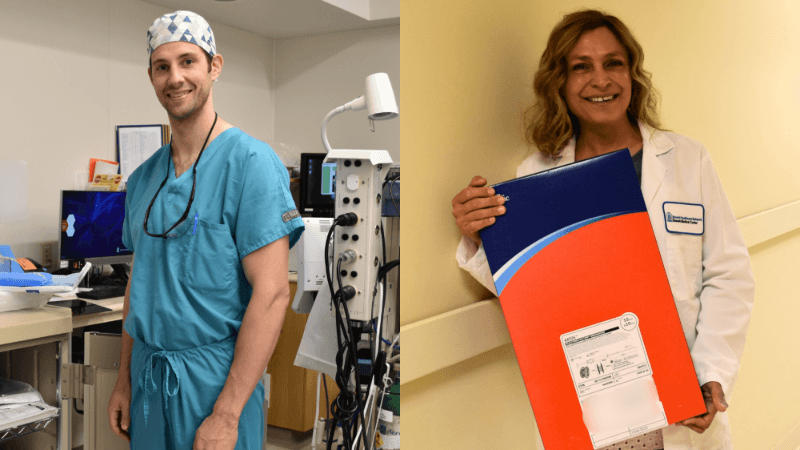
Surgical and Non-Surgical Options Available to Meet Each Patient’s Needs
Bassett Healthcare Network is investing clinical expertise and funding into emerging methods to treat patients suffering from gallbladder issues. In some cases, these methods help patients by reducing the number of hospital visits needed for treatment, reducing recovery time after treatment, or making recovery time more comfortable.
The gallbladder is part of the digestive system. This small organ stores bile that is released when we eat. Bile travels through bile ducts from the liver to the small intestine where it mixes with food to aid in the breakdown of fats and vitamins. Gallstones are pebble-like objects that can develop in the gallbladder. They are often harmless, but if they block the flow of bile this can cause pain, nausea, and inflammation of the gallbladder known as cholecystitis.
Both gallstones and cholecystitis are common. According to the Cleveland Clinic, about 15% of the world’s population has gallstones and about 20% of those people will have complications from these gallstones. Gallstones are the cause of 95% of all cholecystitis cases.
Recently Hired Surgeon Brings Minimally Invasive Technique that Combines Two Procedures into One
Most patients who experience complications from gallstones have surgery to remove their gallbladder, since a gallbladder that has produced gallstones is more likely to produce them again in the future. In otherwise healthy patients, the gallbladder is not essential for digestion, so a patient who has had their gallbladder removed can lead a full, healthy life after surgery.
If gallstones have traveled into the largest bile duct in the body, the common bile duct, they must be removed, as they can cause pancreatitis, infection, or other issues related to blockage of bile flow. Recently, surgeons at Bassett Medical Center have begun completing this process using a procedure known as Laparoscopic Common Bile Duct Exploration (LCBDE).
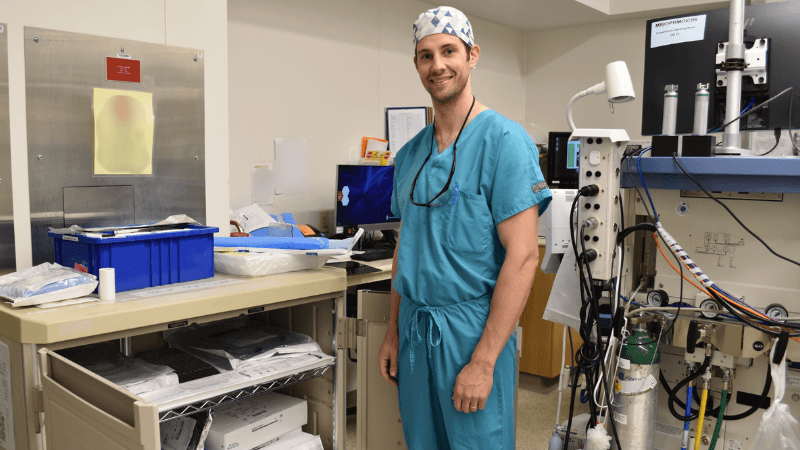
“To explain this procedure in a basic way, during the surgery to remove the gallbladder, we perform an X-ray study where we put contrast down the bile duct to see if there are any stones in there. If there are stones, we use a wire and various instruments to clear those stones out,” explains Casey Lamb, MD, surgeon at Bassett Healthcare Network. “Everything is done in one stage, so patients do not have to have a second procedure performed.”
Prior to LCBDE being utilized, patients often had to have a procedure called an endoscopic retrograde cholangiopancreatography (ERCP) to analyze the bile ducts and remove stones followed by a surgical procedure to remove the gallbladder. Both would be necessary before the patient could fully focus on recovery.
“Combining and condensing everything into a single-stage procedure can allow for a shorter stay for the patient at the hospital. That can reduce costs for the patient, reduce costs for the healthcare system, and the outcomes are equivalent or sometimes even better in terms of stone clearance and the risks associated with the procedures,” said Dr. Lamb.
When Dr. Lamb joined Bassett Healthcare Network in 2024, he brought expertise in this technique to the network and has since used his knowledge to train fellow Bassett surgeons. Four Bassett surgeons are currently utilizing the LCBDE method and over 30 patients have benefited from it.
“Laparoscopic Common Bile Duct Exploration has emerged as an effective alternative to preoperative or postoperative ERCP that can offer advantages to the patient. I am pleased that our Bassett surgeons are beginning to embrace it and thankful to Dr. Lamb for championing it,” said Ethan Talbot, MD, Chief of the Division of General Surgery for Bassett Healthcare Network.
Stents Provide Relief When Surgery Is Not an Option
Sometimes, a patient experiencing issues with their gallbladder may not be eligible for surgical intervention. If they are elderly or have other conditions, removal of the organ could pose undue risks. In this scenario, Bassett surgeons typically refer the patient for gastroenterology care.
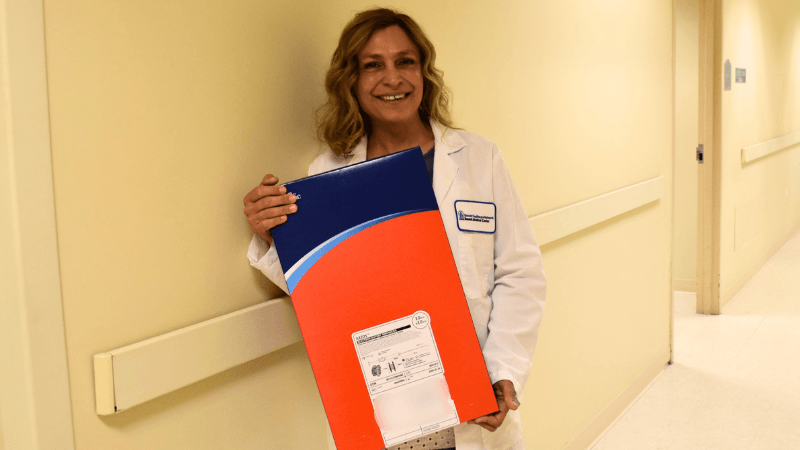
Pascale Raymond, MD, FASGE, FACG, senior attending advanced endoscopist for Digestive Diseases at Bassett Healthcare Network, leads her team in finding the latest innovations to ensure these patients receive the care they need.
Axios stents have been used internationally to drain the gallbladder of bile blocked by gallstones for over a decade. Just recently, in 2023, they were cleared by the FDA for use in the United States. Prior to that, this medical device was used in our country to address large pancreatic cysts.
“I completed my advanced endoscopic training in Montreal, Canada and Marseille, France, and I regularly travel back to Europe with my nurses for international conferences. That’s why I feel our team at Bassett was so well-prepared to utilize this new intervention,” said Dr. Raymond.
The stent is placed between the gallbladder and the digestive tract, opening up a new, direct, internal passageway for fluids, bile, and gallstones to bypass any obstructions. For this procedure, the patient is typically under anesthesia for less time than they would be for gallbladder removal surgery.
Before stents were used in this way, the same patient would likely have left their gastrointestinal (GI) procedure with an external drainage port. These ports can be uncomfortable and might come with added risks of injury or infection.
“We provide advanced GI care here at Bassett. We almost never send any GI patients outside of the network. In fact, we get patients coming to us from as far away as the Canadian border,” said Dr. Raymond. “I am very proud of our team and the excellent care we provide.”