Acorns and Mice: Why Ticks Are An Enduring Problem in Our Communities
August 18, 2025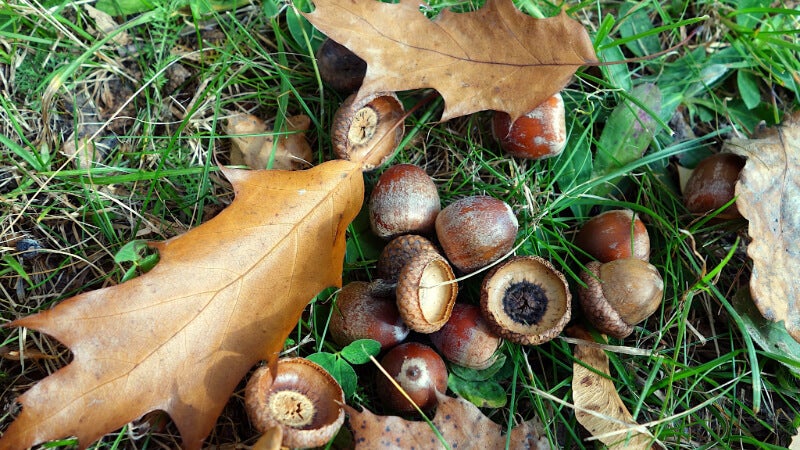
Categories: Bassett News
Bassett Healthcare Network practitioners are currently diagnosing an increasing number of tick-borne diseases, including anaplasmosis, Lyme disease, and babesiosis.
Community members who may have been bitten by a tick and are experiencing flu-like symptoms are encouraged to seek prompt medical attention. Early diagnosis often leads to a complete recovery, while late diagnosis can lead to serious complications.
Researchers at Bassett’s New York Center for Agricultural Medicine and Health (NYCAMH) have long worked to understand the impact ticks have on people, animals, and environments across the state and country. We sat down with NYCAMH research scientist Amanda Roome, PhD, to learn more about the ecological factors that are making this tick season particularly concerning.
Q:
We know that not every tick bite will lead to anaplasmosis, Lyme disease, or another tick-borne illness. What contributes to whether a tick could put us in danger of disease?
A:
Ticks generally are not born with any sort of human pathogen. The bacteria that cause Lyme disease, anaplasmosis, or other tick-borne illnesses are not typically transmitted transovarially (or from a parent tick to its offspring).
Instead, we see reservoirs of infection, where other animal populations are harboring the bacteria or virus. Researchers look into the potential reservoir’s competency to determine the odds that the bacteria will be transferred to the tick if it feeds off the animal.
The most competent reservoir is the white-footed mouse at approximately 90 percent. Generally, the larger the animal gets the less competent it is at transmitting the pathogens to ticks. One of the reasons why we are seeing more and more infection problems is that we, as humans, create micro-ecologies. We build farms and homes and mice can find their way inside. We create these areas where we drive out predators of these small rodents. Ticks have fewer choices of what they can feed on. We’re inadvertently, and in a lot of ways inescapably, helping the rodent population boom, the most competent reservoir for tick-borne diseases.
Q:
Are there any other ecological factors that you see contributing to the tick population each year?
A:
Interestingly, researchers have found that acorns make an impact. Keep in mind that mice are our biggest enemy (they’re most likely to transmit the human pathogens to ticks). Oak trees have mast seasons every two to five years, when they produce many acorns. Here in New York, we had our last mast season in 2023. At that point, the mice population expanded since they had such a smorgasbord of acorns to eat.
Deer ticks typically live for about two to three years, so the ticks that fed off of the boom in mice in 2023 (many of which were likely carrying disease) were larvae by the summer of 2024 and have now molted into nymphs in the summer of 2025.
Nymphs are responsible for as many as 90 percent of all human Lyme disease cases. Given the mast season, it’s not too surprising that we’re seeing an increase in tick-borne disease cases this year.
In general, we’ve seen disease cases trend upwards, and I do believe that will continue, but we do also see sort of a waxing and waning, depending on the mast seasons and acorns they bring.
Q:
Why are nymphs so much more concerning than other ticks?
A:
A lot of it comes down to the tick’s size and the changing seasons. Baby ticks, the larva, are only about the size of a pinhead. They typically aren’t carrying disease yet, as they haven’t fed on anything. Adult ticks are about the size of a sesame seed, so they are much easier to spot and get off of us before they are attached long enough to transmit disease. Adult ticks are also usually around in the autumn and spring, when we are wearing long pants and long sleeves.
Nymphs are most active in the summer when we have the most skin exposed and are spending a lot of time outside. In their larval stage, they have fed on animals like mice, so they may be carrying human pathogens. At this stage, they are about the size of a poppy seed, so they are also much harder to spot than a larger adult tick.
Q:
What about the deer population? How do deer contribute to the tick population?
A:
Deer play a unique role. For the deer tick, the deer is the main breeding site. Adult ticks often have their “last meal” on deer and then they mate. The male ticks die, but the female ticks “overwinter” and then emerge in the spring to lay their eggs, and die. Interestingly enough, deer actually have a prophylactic immune response to the bacteria that causes Lyme disease, so when a tick feeds on deer blood, it will clear the bacteria it has.
Studies have been done on massive deer cullings, where deer are selectively reduced in an area. After a long period of time, about 10 years , you do see a marked decrease in human Lyme disease. So, the deer population can have an indirect influence on this issue.
Q:
In the face of all this, is there anything an individual person can do to protect themself and their family members from tick-borne disease?
A:
Any day that’s above 39 degrees, regardless of the season (think mid-winter thaws!), you want to be checking yourself and your pets for ticks. Ticks on your clothes can survive a washing machine, but the heat of the dryer typically kills them. Pesticides and bug sprays can work wonders, just be sure to read the labels and use them appropriately. Personally, I swear by treating clothing with permethrin. Also, landscaping modifications at your home can help. Deer ticks need moisture to survive. That’s why we have so many of them in the Northeast. Well-manicured, open lawns are less appealing to ticks than wooded areas with a canopy cover. The key thing to remember is the best way you can protect yourself from tick-borne diseases is to not be bitten and, if you do find a tick attached to you to remove it as quick as possible.
 Amanda Roome, PhD, works as a research scientist at Bassett Healthcare Network’s NYCAMH. She specializes in tick-borne disease research in agricultural, forestry, and fishery populations. To learn more about NYCAMH’s work, visit https://www.nycamh.org/.